

Example Properties
Hospitality and healthcare assets across global markets; Lagos, Houston, and beyond.
Statements on this page regarding projected returns, capital targets, investor participation estimates, and portfolio valuations are forward-looking statements within the meaning of the Private Securities Litigation Reform Act of 1995 (15 U.S.C. § 78u-5). They are subject to risks and uncertainties and do not constitute an offer to sell or solicitation to purchase securities in any jurisdiction. The Community REIT™ is a development-stage enterprise. All projections are hypothetical and based on internal modeling assumptions. Actual results may differ materially from those projected. Please review all offering documents carefully and consult your financial advisor before making any investment decision.
Institutional Assets.
Community Ownership.
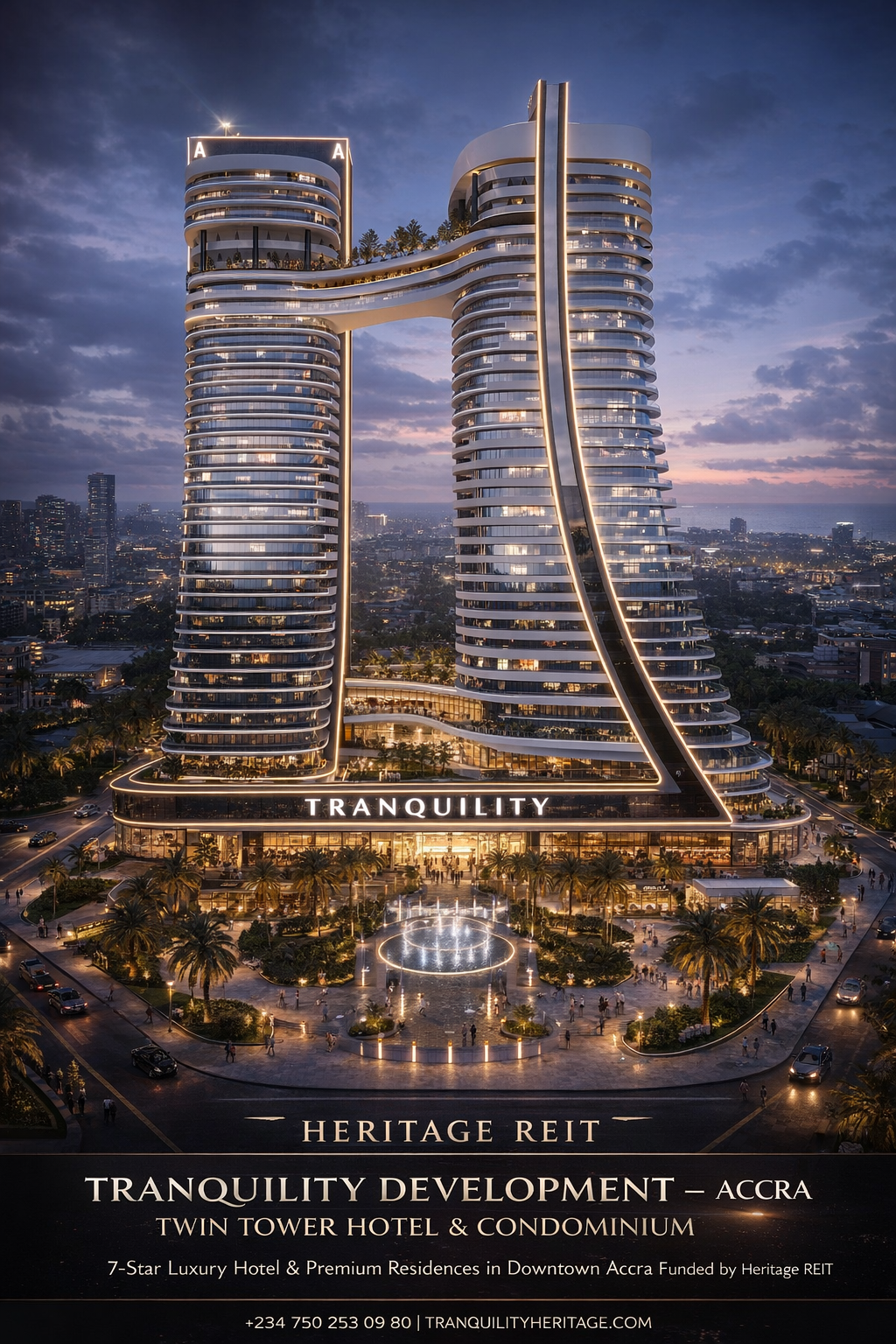
Sea of Tranquility Towers
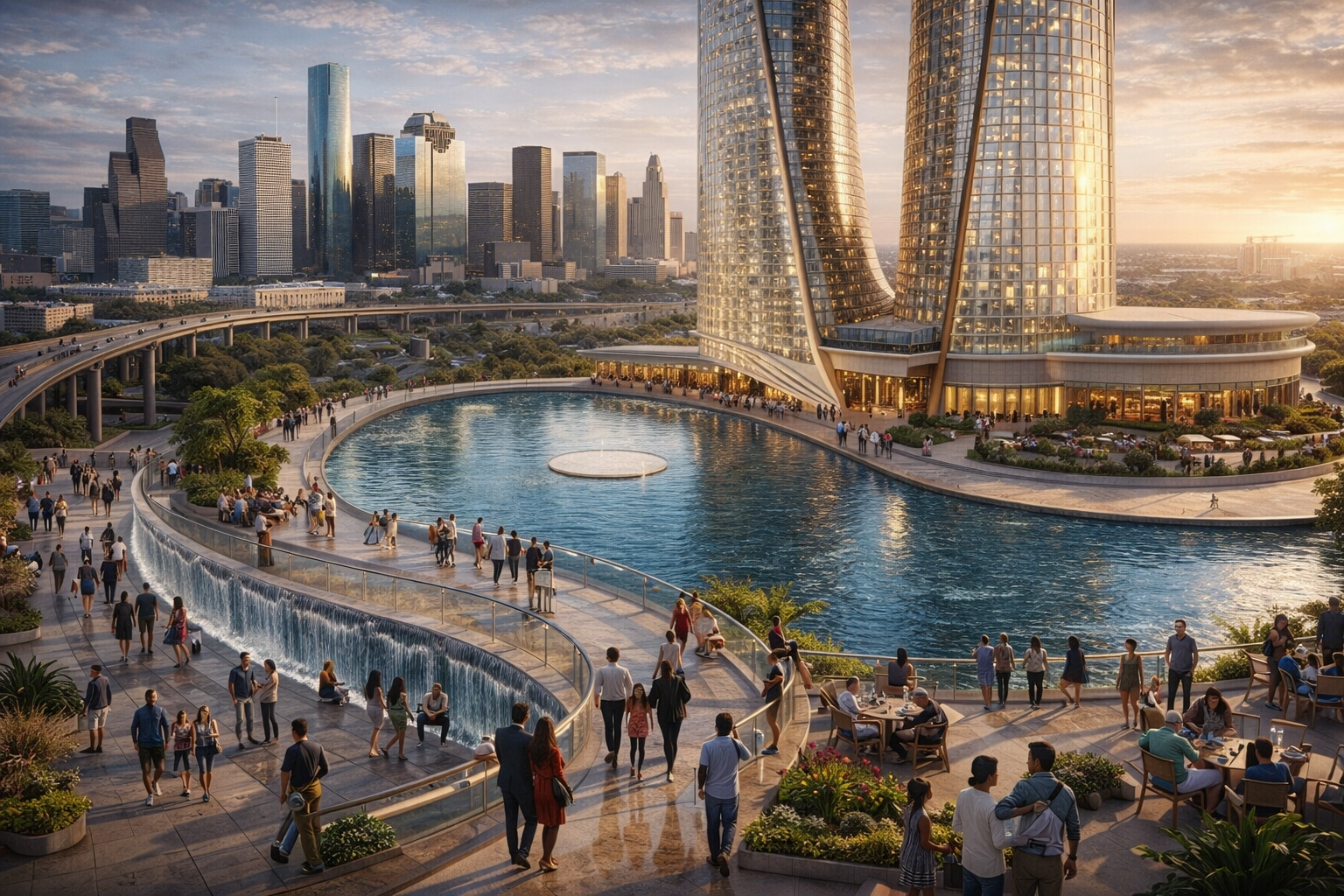
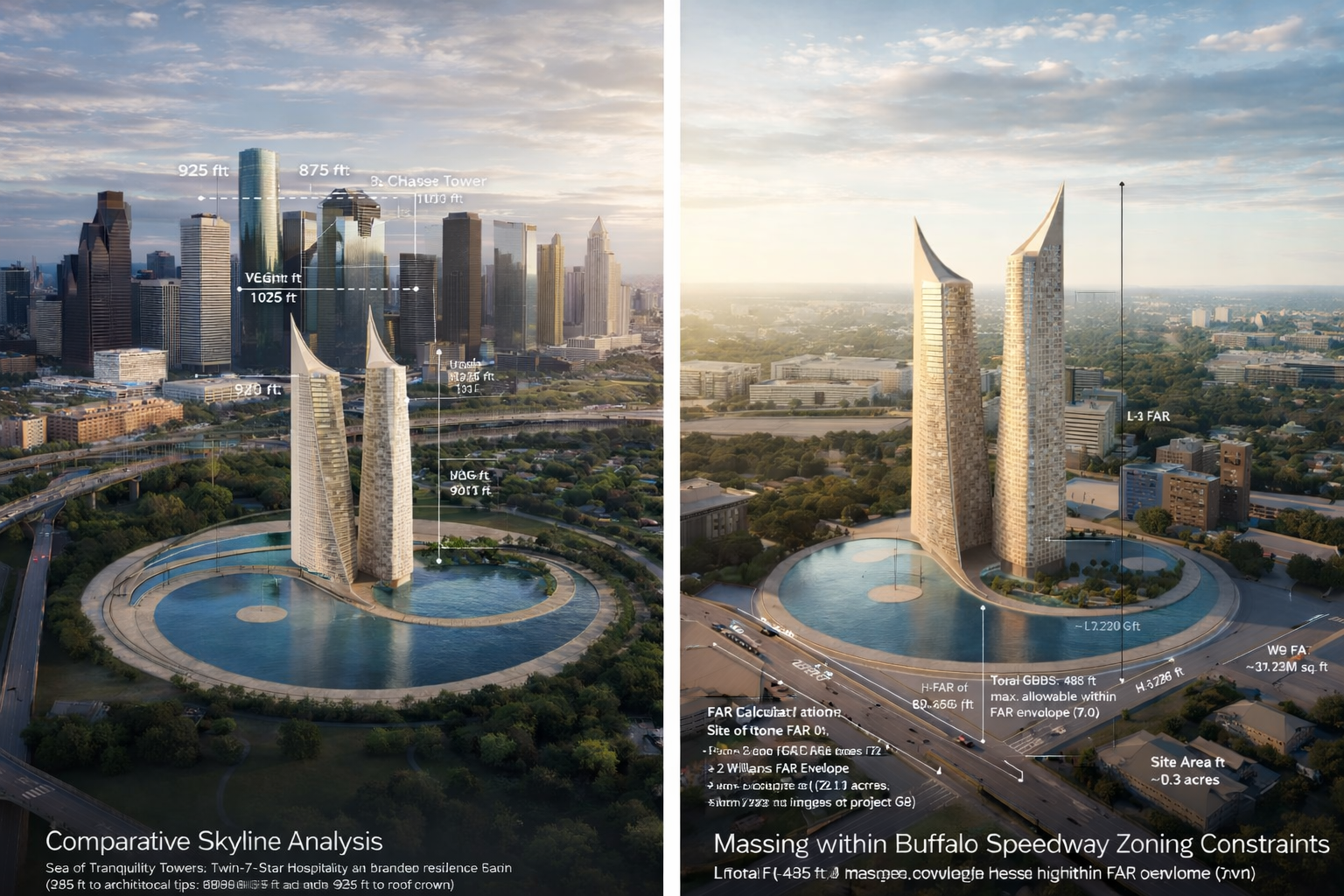
A 925-foot supertall landmark redefining the Houston skyline. A 7-star hotel, ultra-luxury condominiums, a civic promenade, and the Yin-Yang water platform; designed to anchor a new era of urban development on Buffalo Speedway.
A Landmark Built for Generations
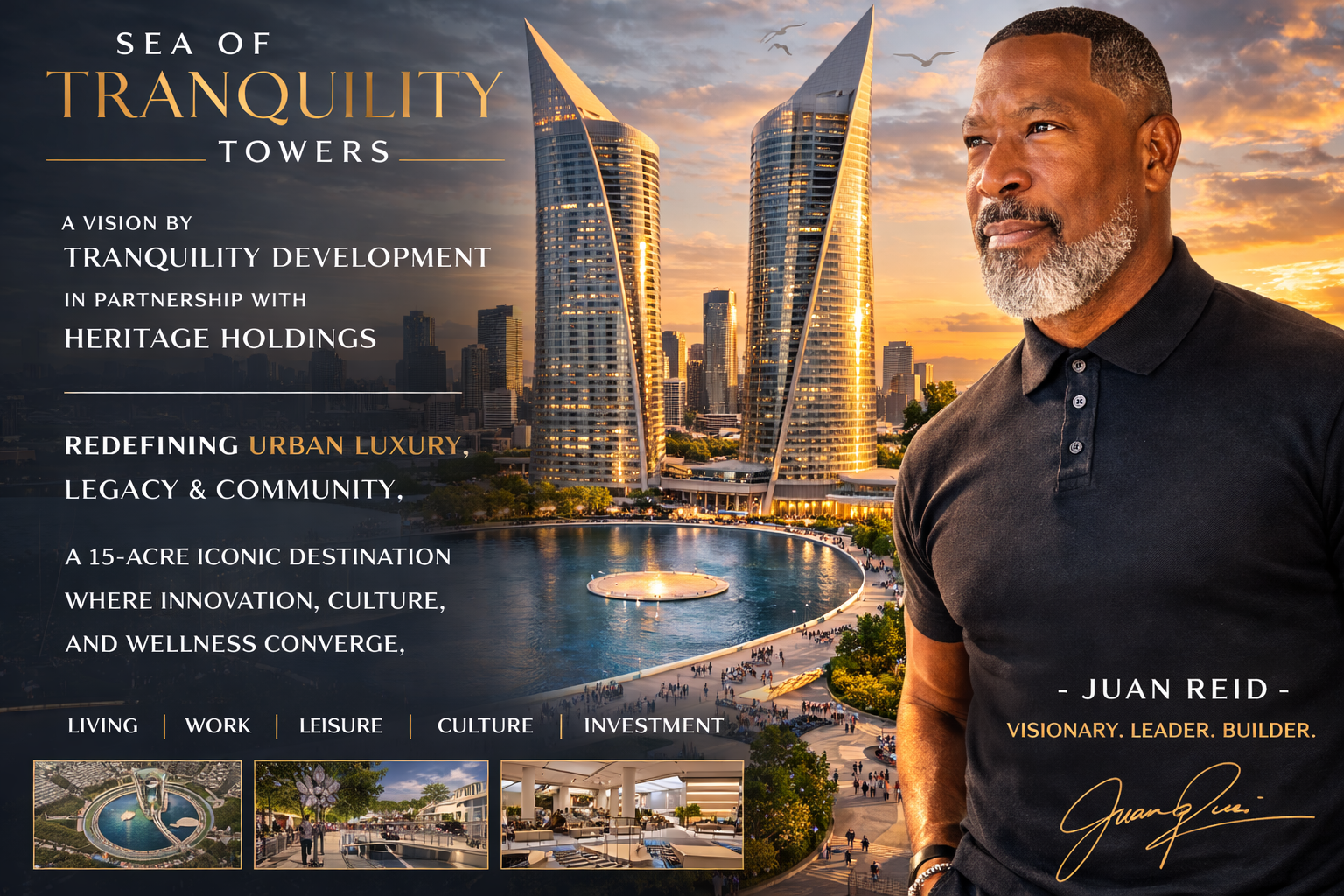
Sea of Tranquility Towers is the flagship asset of Heritage Holding LLC; a project of institutional scale designed to transform the Buffalo Speedway corridor into a world-class urban destination. Tower A rises to 925 feet; Tower B anchors the mixed-use promenade below.
The development includes a civic promenade with the Yin-Yang water feature, cascading waterfall wall, 7-star hotel and condominium complex, and ultra-luxury residential units; all anchored by The Community REIT™ capital structure.
* $3.7B represents the stabilized development target value. This is a forward-looking figure subject to financing, regulatory approval, market conditions, and project completion. Not a guarantee of future results. This is not an offer to sell securities.
Sea of Tranquility Towers

REIT™
“Institutional-grade real estate owned by 40,000 community investors across two continents.”
Development Financials
Tranquility Tower
Tranquility Tower
Projections based on Tranquility Towers model (200 hotel keys, branded residential, non-branded residential). Forward-looking — not a guarantee of results.
Heritage Hill Country Resort
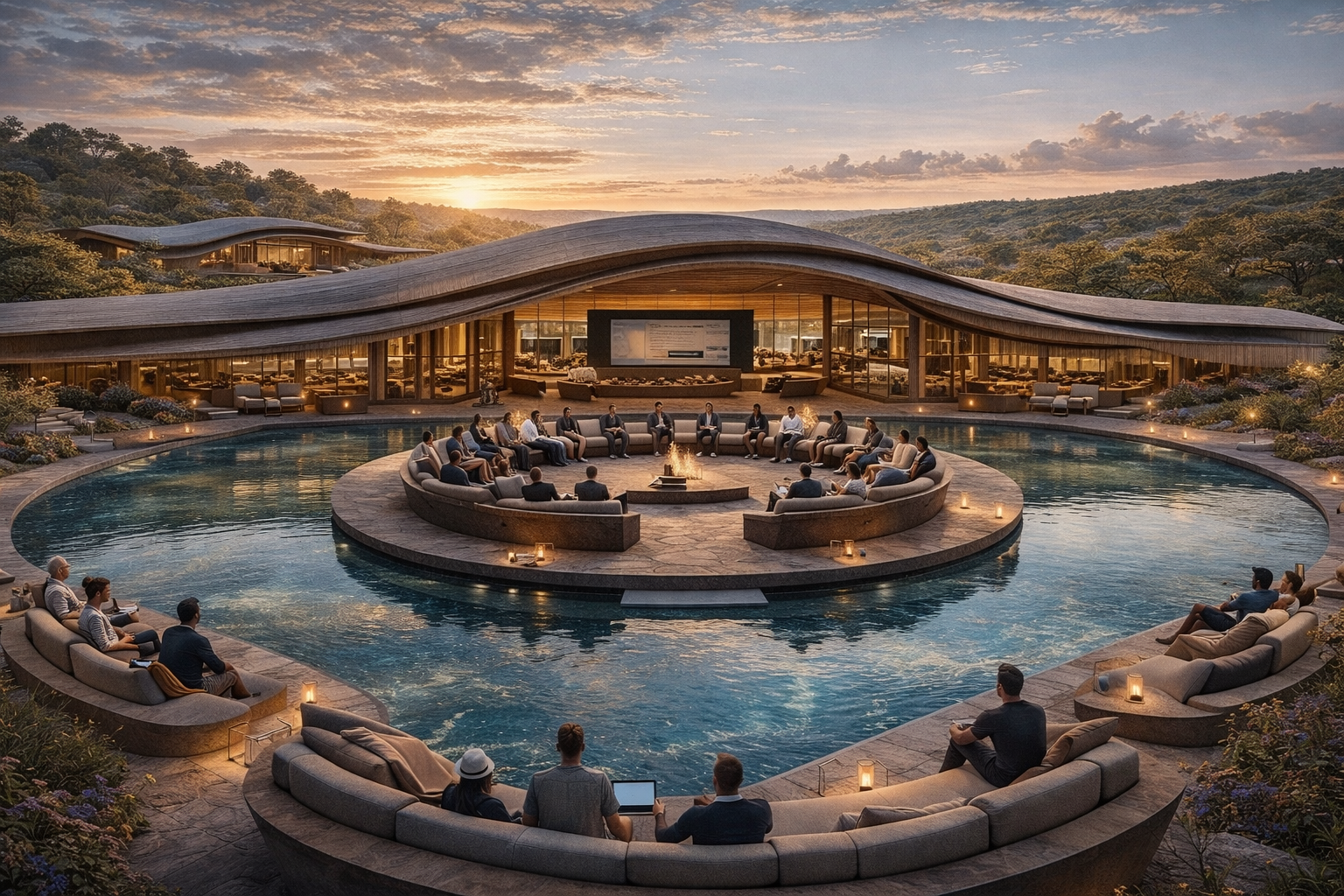
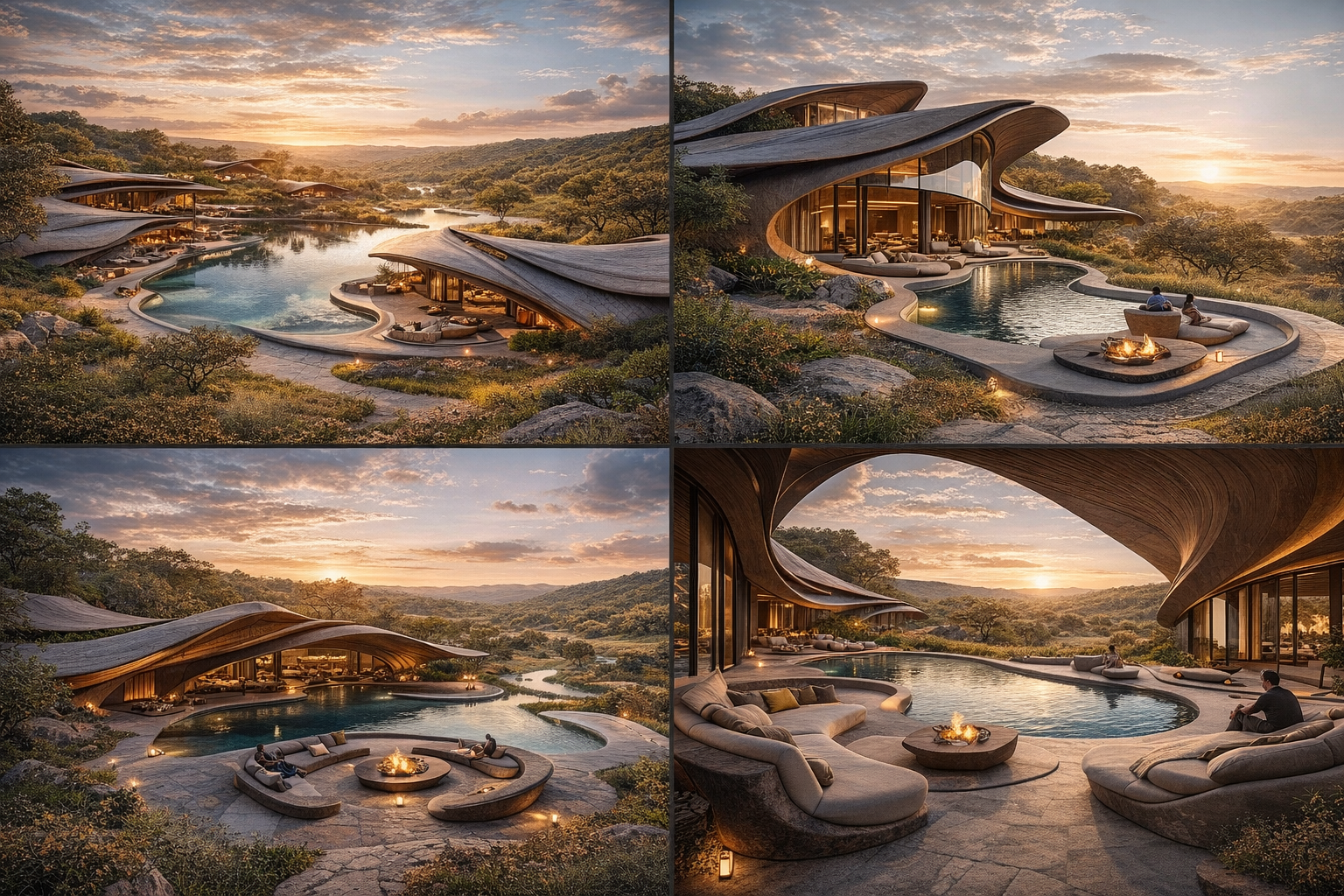
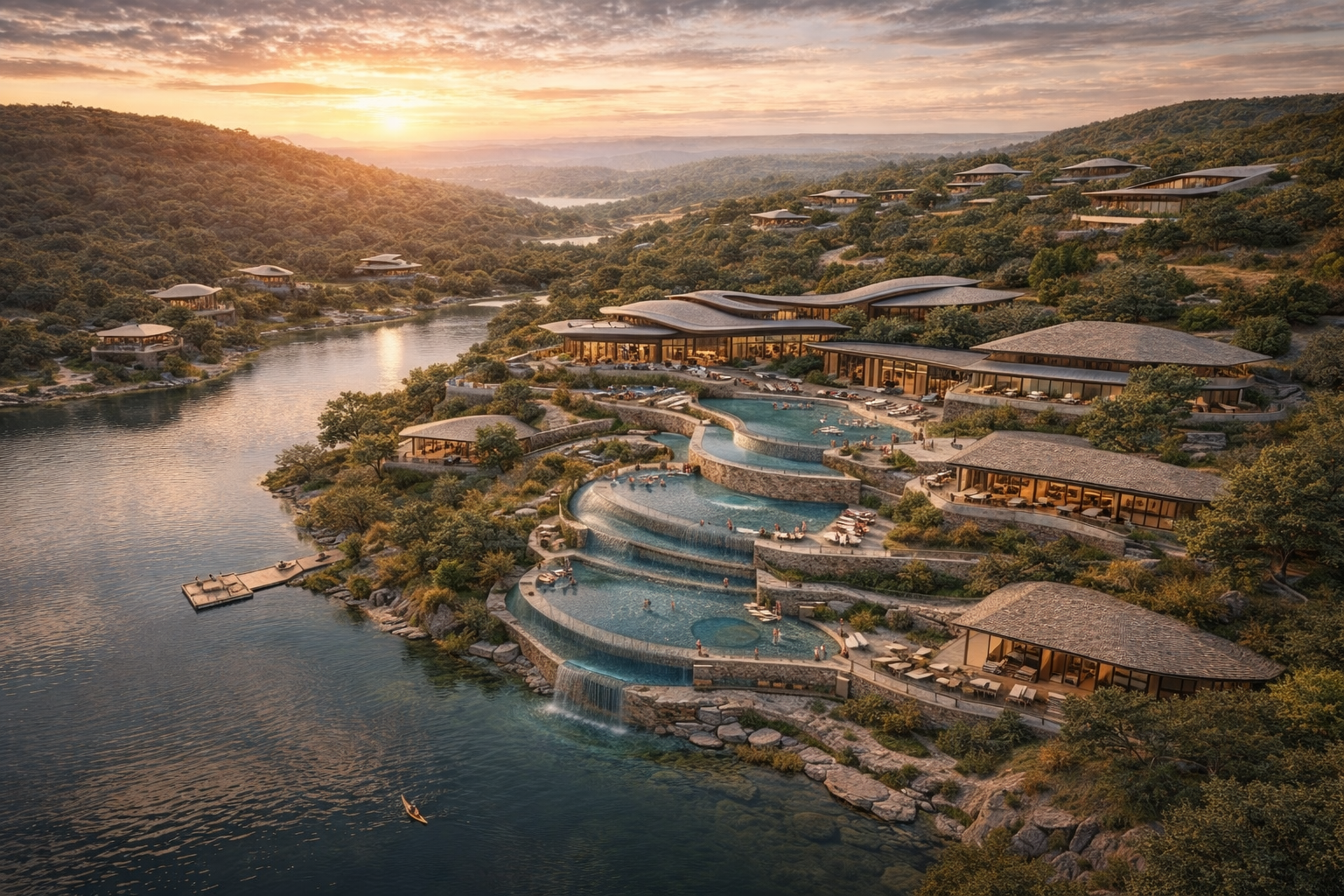
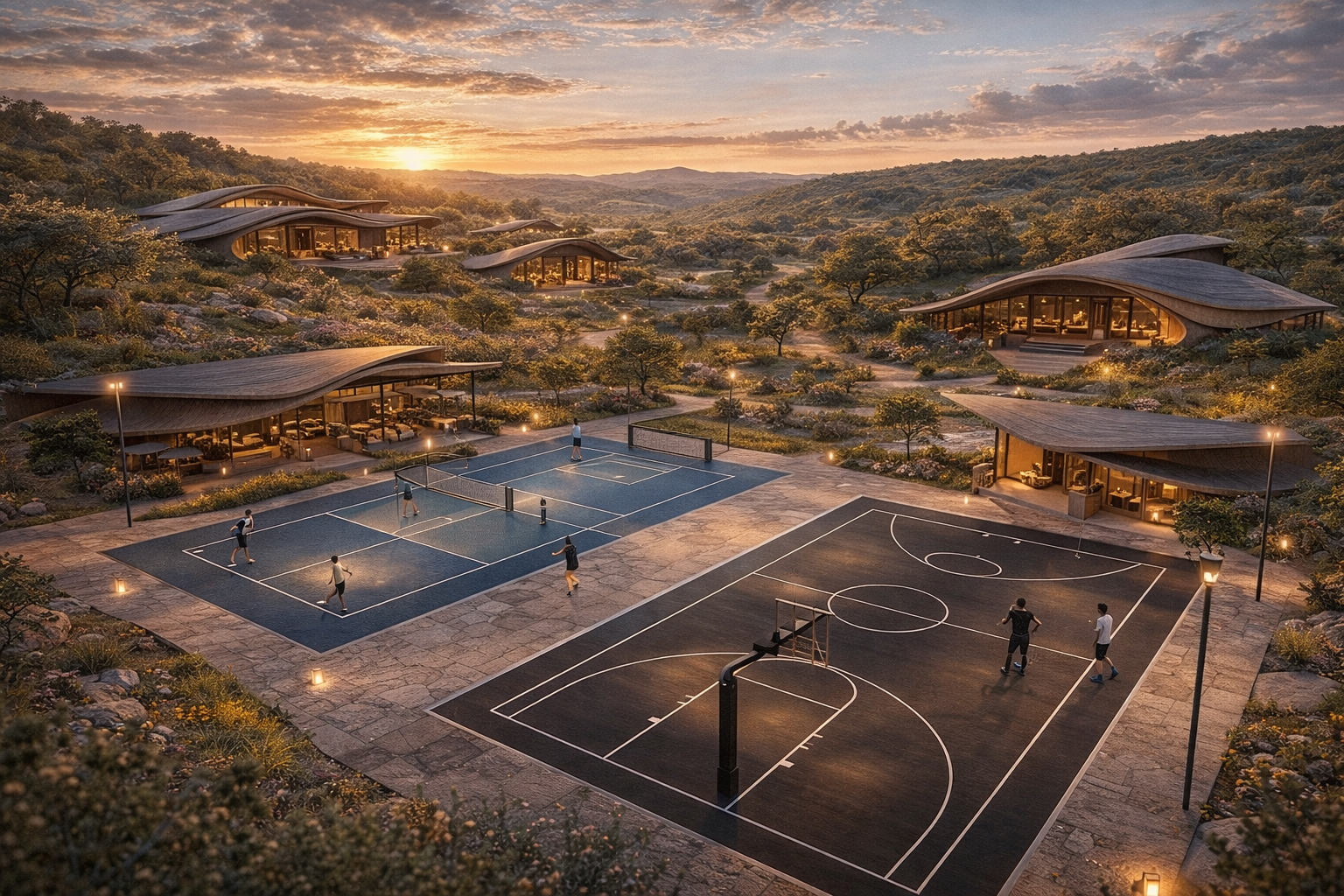
A 5-star destination wellness resort on 40–60 acres of Texas Hill Country — where world-class design, holistic wellness, and elevated hospitality merge with the landscape. Developed by Tranquility Development LLC.
6,500 SF spa and hydrotherapy center. Infinity pools and water features. Full-service wellness programming and fitness recovery.
Signature dining, wine lounge, and rooftop sunset terraces. Gourmet culinary experience with local Hill Country sourcing.
3,500 SF conference and retreat facilities. Unparalleled privacy, dedicated concierge service, and smart technology throughout.
* $60M+ represents estimated construction cost at $1,500/SF. $250M represents target capitalization. Subject to financing, regulatory qualification, and completion. Not a guarantee of future results. This is not an offer to sell securities.
Texas Hill Country
Luxury Wellness Resort
An iconic 5-star resort where world-class design, holistic wellness, and elevated hospitality merge seamlessly with the breathtaking beauty of the Texas Hill Country. Near Austin · Wimberley · Dripping Springs.

Menta Explorer
& Menta Stadium
Thought. Movement. Legacy. A landmark destination where architecture, community, and experience converge; designed by WKK Tom Wright Wong & Ouyang and Gensler, owned by Tranquility Development LLC.


Movement.
Legacy.
"A landmark destination where architecture, community, and experience converge — a symbol of intelligence, creativity, and unity."
Wong & Ouyang


